Explore the Six Wonders
From complex hydraulic systems to sheer rock faces painted with celestial figures, explore the unparalleled architectural achievements of the ancient world.
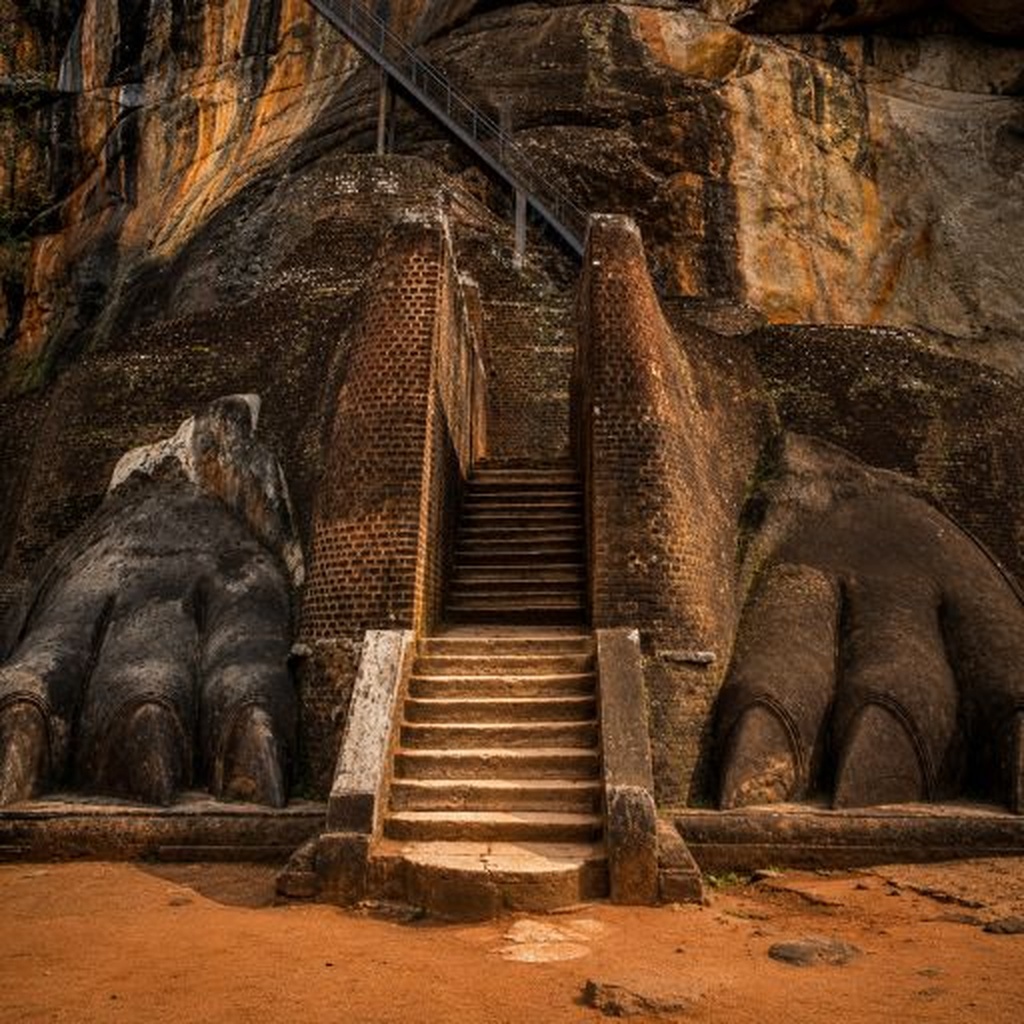
1. Lion's Paw Terrace
Situated on a small plateau about halfway up the side of the rock, this terrace features the monumental paws of a carved stone lion. Originally, the lion's head was intact, and visitors had to enter the final ascent to the palace through the lion's open mouth.
The name "Sigiriya" (Lion Rock) is derived from this massive structure. Though the head collapsed centuries ago, the surviving paws remain an awe-inspiring testament to ancient Sri Lankan sculpture.
2. The Frescoes
Painted halfway up the sheer rock face, the Sigiriya Frescoes are renowned worldwide. Originally, the entire western face of the rock was a massive picture gallery - perhaps the largest in the world - featuring hundreds of celestial maidens (Apsaras).
Today, only about 18 figures remain, preserved in a sheltered depression. The vibrant colors and delicate brushwork show a unique style of ancient Sri Lankan art, differing slightly from the classical Anuradhapura period.
3. Water Gardens
The water gardens at the western precinct of Sigiriya are among the oldest landscaped gardens in the world. They are symmetrically laid out and incredibly complex, featuring pools, fountains, and serpentine streams.
The hydraulic system consisting of underground terracotta pipes is so advanced that the limestone fountains still work today during the rainy season, over 1,500 years after they were built.
4. The Mirror Wall
Originally built to protect visitors walking along the narrow pathway hugging the rock, this brick wall was covered in a highly polished white plaster. It was so reflective that the king could see his reflection as he walked past.
Over the centuries, visitors etched poems and thoughts onto the wall, now known as Sigiri Graffiti. These verses, dating from the 8th to the 13th centuries, provide invaluable insights into ancient Sinhalese language and society.
5. Summit Palace
At the very top of the 200-meter rock lie the ruins of King Kasyapa's fortified palace. Covering 1.5 hectares, the summit features a terraced layout incorporating royal quarters, audience halls, and a massive rock-cut pool.
The panoramic view from the summit allows visitors to survey the vast surrounding jungle, just as the ancient king did, while marveling at how building materials were transported to such a height.
6. Boulder Garden
In stark contrast to the symmetry of the Water Gardens, the Boulder Garden is an asymmetrical, naturalistic layout utilizing massive boulders. This area served as the foundation for the fortress's outer defenses.
Many boulders have notches cut into them, which once supported timber pavilions. Winding pathways weave through this natural rock maze, creating a cool, shaded ascent toward the Lion's Paw.